#MakeDesignersMatter
OVERVIEW
PROJECT TYPE
SUBJECT
#MakeDesignersMatter project aims to elevate the role of designers, challenging stereotypes that minimize their importance, especially among Generation X Asian parents. This initiative seeks to broaden public awareness about how designers are key to business success, influencing market dynamics and consumer behaviors significantly. By highlighting their contributions to innovation and economic growth, the campaign addresses the underestimation of design roles and demonstrates their crucial impact across various sectors.
2024
ADVOCACY DESIGN
YEAR
Independent Project
Poster Design

Before delving into the main topic, I would like to share a story about a friend who aspired to become a designer. This individual demonstrated considerable talent in design and was passionate about pursuing a career in the field. However, when he attempted to convince his parents of his career choice, he was met with resistance. His parents argued that pursuing a career in design was akin to 'self-destruction', implying that it lacked long-term prospects or stability.
Understandably, this reaction left my friend deeply disheartened. Nevertheless, he remained resolute and persisted in his efforts to gain his parents' support for his aspirations.
This story led me to reflect on the underlying reasons for their perspective. Could their views be influenced by generational differences or cultural values?
Deep Research Across Generations
So I am conducting research that investigates the intergenerational perceptions of design and how these perceptions have evolved over time, with a particular focus on the tendency of certain generations to undervalue or underestimate the role of designers. This section presents an analysis of these observations, shedding light on the shifting significance of design across different generational cohorts.
By exploring the changing attitudes towards design, this study identifies a notable gap in understanding, particularly among older generations, regarding the impact of design on contemporary industries and the economy. Specifically, findings indicate that individuals from Generation X, especially in Asia—many of whom are parents to Generation Z—are more likely to hold misconceptions about the design profession. These perceptions can be attributed to the fact that, during their formative years, the economic influence and professional importance of design were not as pronounced as they are today.
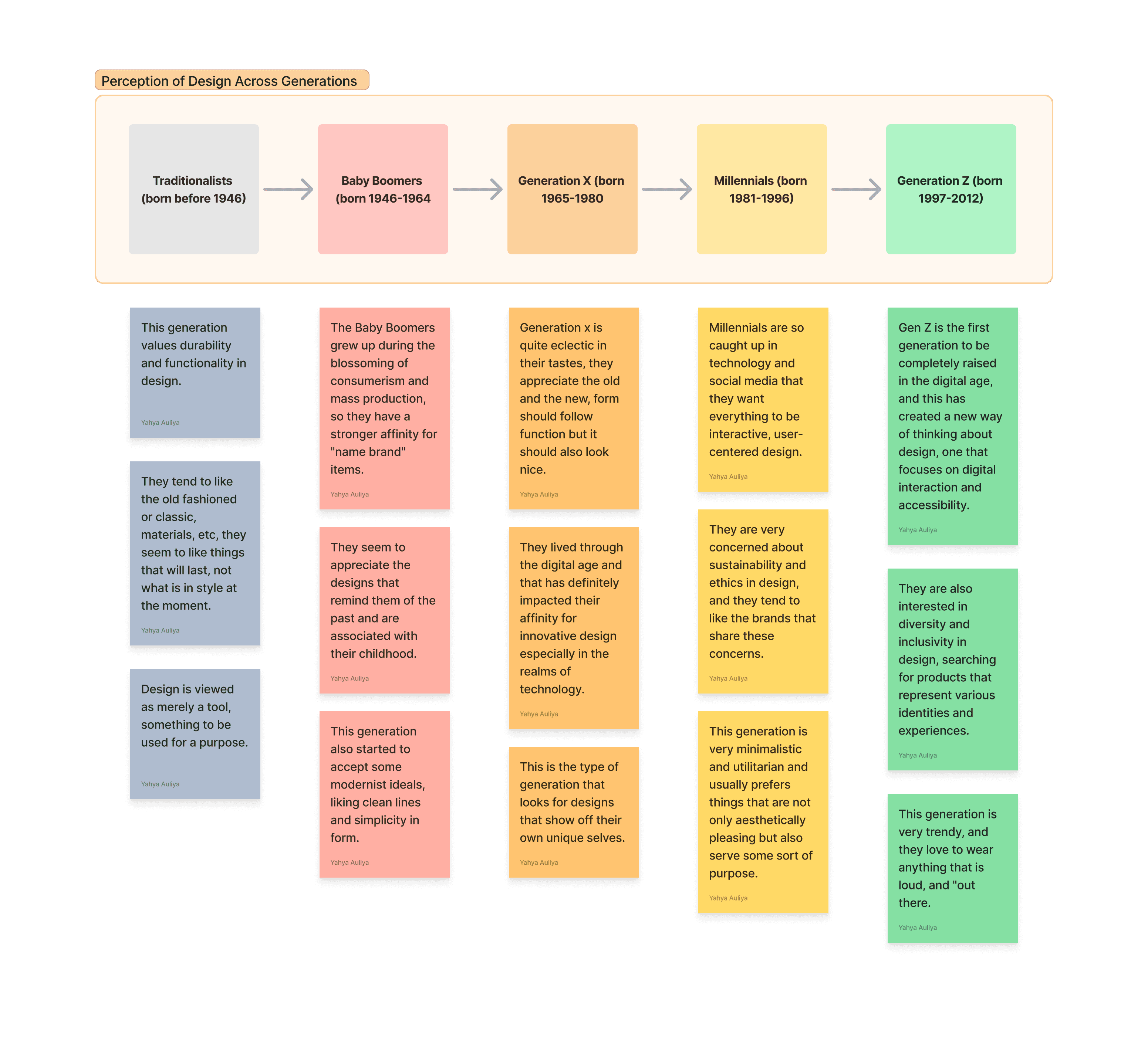
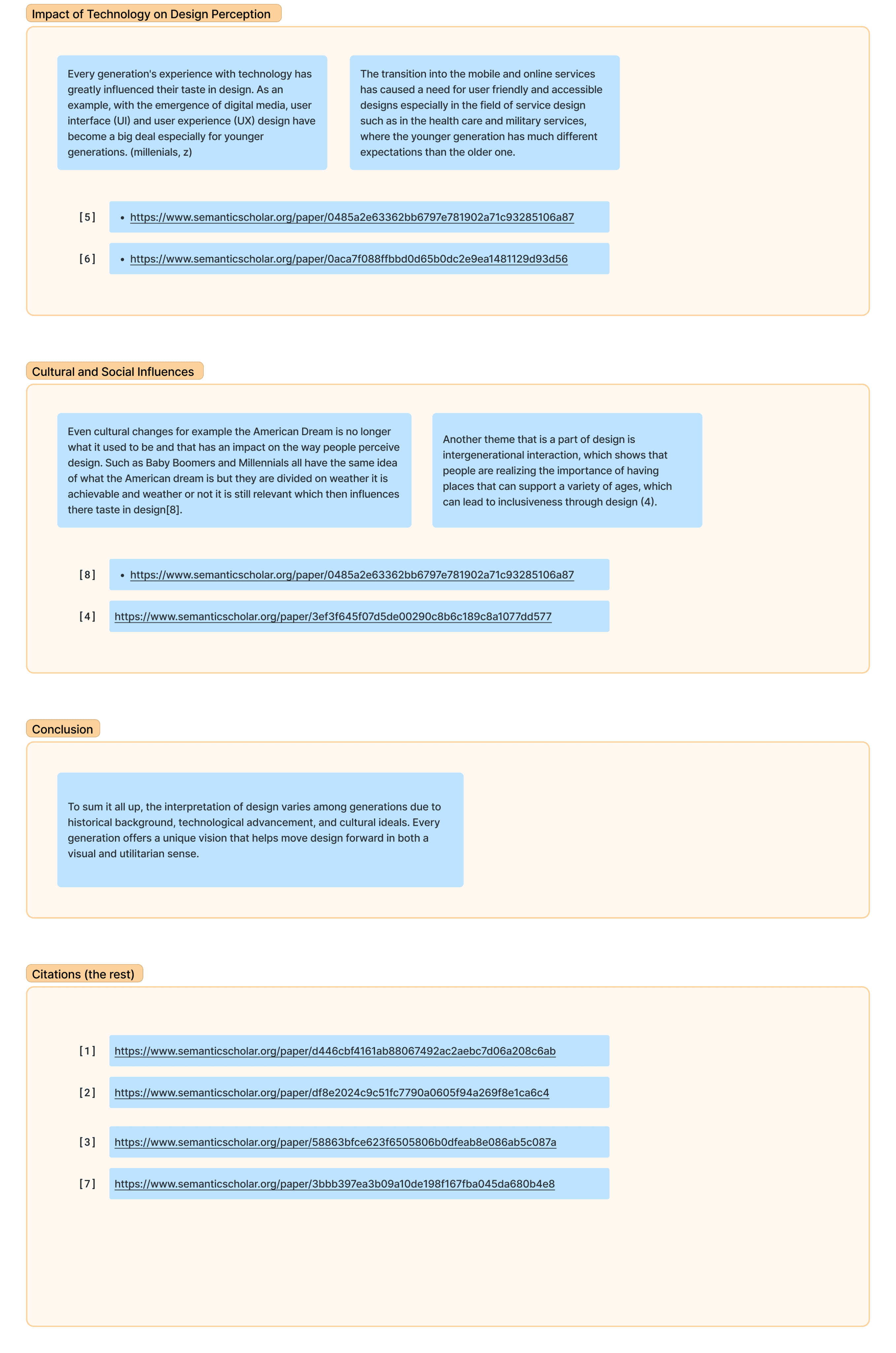
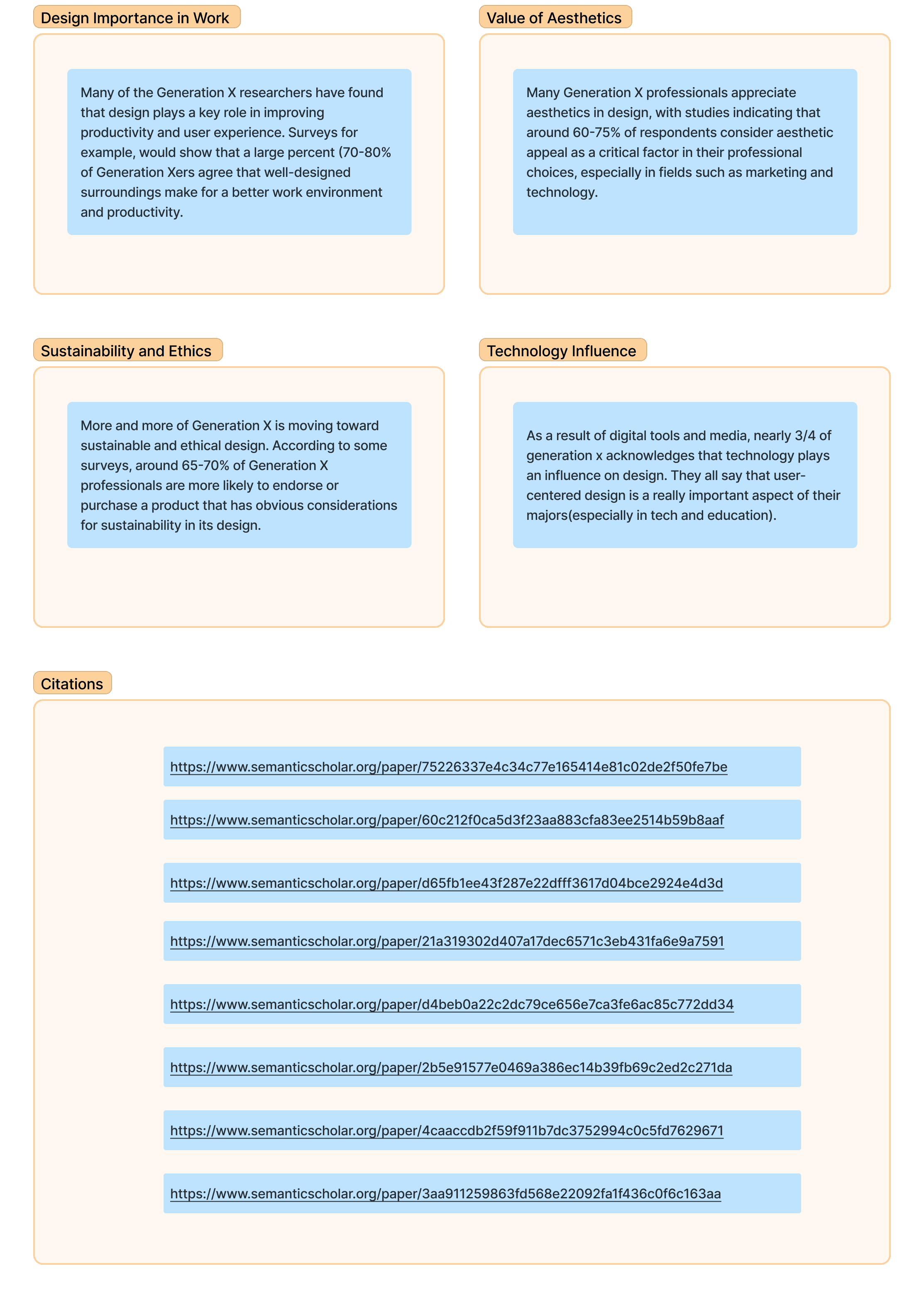
Top 5 reasons ASIAN Gen X usually states
What are the primary reasons cited by Generation X for their skepticism toward the design profession? The following are some of the most frequently expressed concerns :
These views reflect a limited understanding of the evolving role and significance of design in modern industries, highlighting the need to address such misconceptions.

Lack of financial stability
Perception that the field lacks challenge
Considered not a respected profession
Viewed as merely a hobby, not a "real" job
impractical or unserious career choice
Undervalued
Professions

Graphic designer
Interior designer
UI/UX designer
Game DEV designer
Fashion designer
canva designer
Motion Graphics Designer
Product designer
This misconception perpetuates social inequality within society concerning the profession of designers, despite the fact that designers deserve equal respect as other professions. The role of designers in the contemporary economic landscape is undeniably influential. For instance, architects are the creative minds behind unique and aesthetically pleasing buildings. Graphic designers craft eye-catching advertisements, and even the chair we sit on was thoughtfully designed by a product designer to ensure comfort and functionality.
These examples highlight that the contributions of designers are far more significant than commonly perceived by the public. Designers are not merely creators of beautiful objects; they engage in research, problem-solving, user testing, and a range of other critical processes that shape our everyday lives.
According to various surveys and studies, approximately 60% of Asian parents perceive careers in design as less stable and financially rewarding when compared to professions such as engineering or medicine. This perception often leads to a lack of full parental support for children who choose to pursue design as a career path. In cultures that place a high emphasis on academic success and traditional career trajectories, it is estimated that over 50% of parents may underestimate the value of creative professions, viewing them primarily as hobbies rather than viable career options.
Perception of Design Careers
60%
50%
Cultural Values
Surveys and studies have shown that many Asian parents perceive careers in design as less stable or financially rewarding compared to fields such as engineering or medicine. This belief can lead to a lack of support for children pursuing design.
In cultures that prioritize academic achievement and traditional career paths, it is estimated that around 50% or more of parents may undervalue creative professions, viewing them as hobbies rather than viable career options.
cited from :
estimated around 50% or more
https://www.semanticscholar.org/paper/ef27b5858067980ebfd7a652c0e48c45c904d69c
https://www.semanticscholar.org/paper/85c94d4d017581910acc90aa712f59c46f7048b7
https://pubmed.ncbi.nlm.nih.gov/37902165/
https://www.semanticscholar.org/paper/3b43d6463a3dff2bac99c3d2e5a2054db1f80cae
https://www.semanticscholar.org/paper/c5aa1f2af9726905b41892fec5e7a314f09aa5a2
https://pubmed.ncbi.nlm.nih.gov/35881770/
https://www.ncbi.nlm.nih.gov/pmc/articles/PMC5855163/
Surveys and Studies
Recognizing this, as a designer, I conceived the idea of launching a campaign to illustrate the pivotal role designers play across various sectors of the economy and society. The aim is to encourage Generation X to reassess their perceptions of designers and understand the significant impact designers have on their lives.
To develop this campaign, I conducted research on the behaviors and preferences of Generation X to identify the most effective approach for conveying the message. Through this research, I discovered that grocery stores are a common location frequented by individuals at least once a week. Notably, parents from Generation X are among the most frequent visitors to these stores, making it an ideal setting for engaging this demographic.
Groceries as a Medium to Convey the Message

In this approach, I leverage people's perceptions of products by analyzing items they regularly see and purchase at grocery stores, which are essential in their daily lives. I then focus on identifying which products are most frequently bought.
For this campaign, I use posters as the medium to convey the message. The posters subtly hint at the product without directly showing the brand, allowing them to engage with 'buyer psychology.' The idea is that when viewers see the poster, they may spontaneously recognize the product. I believe this approach helps make the message more easily understood by the audience.
Concept
Approach
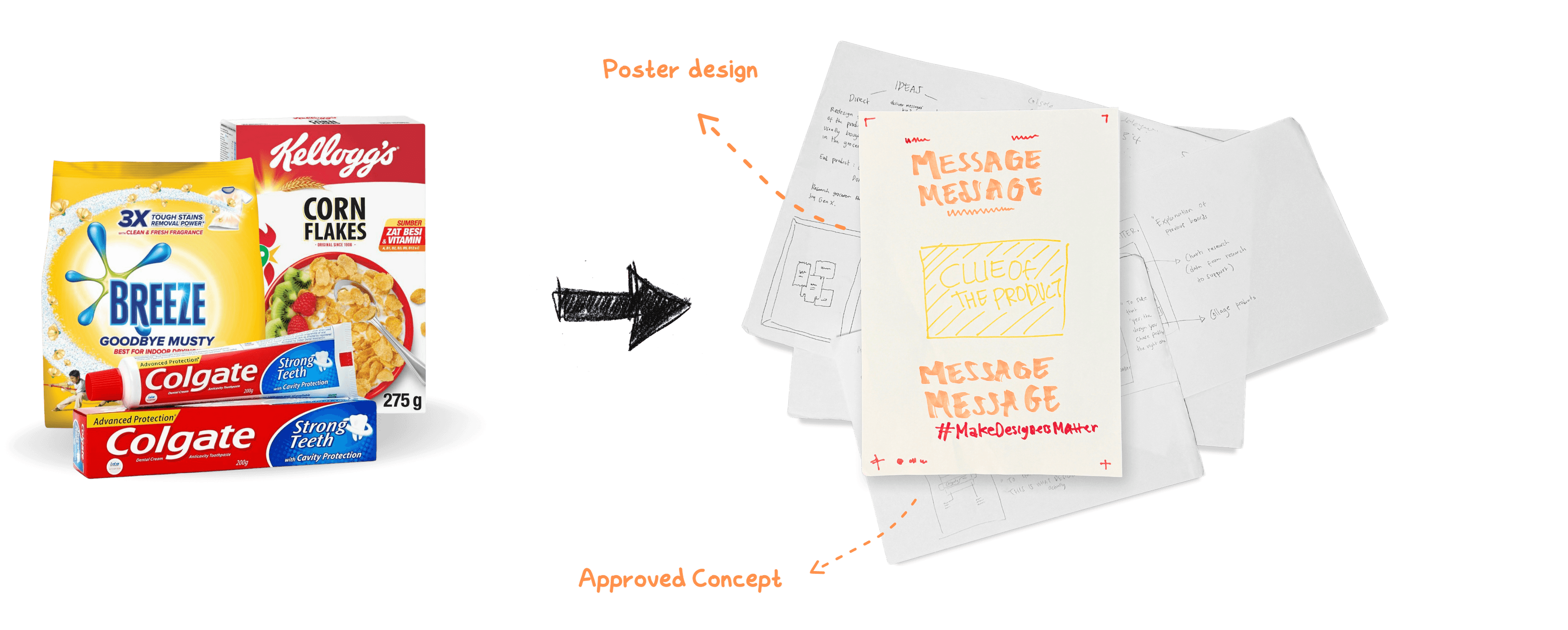
The poster aims to deliver a compelling message emphasizing the importance of respecting designers, effectively interlinking this idea with the featured products. Additionally, it incorporates factual information about designers, underscoring their contributions to society. This approach is intended to ensure that the message is communicated clearly and aligns with its intended purpose.
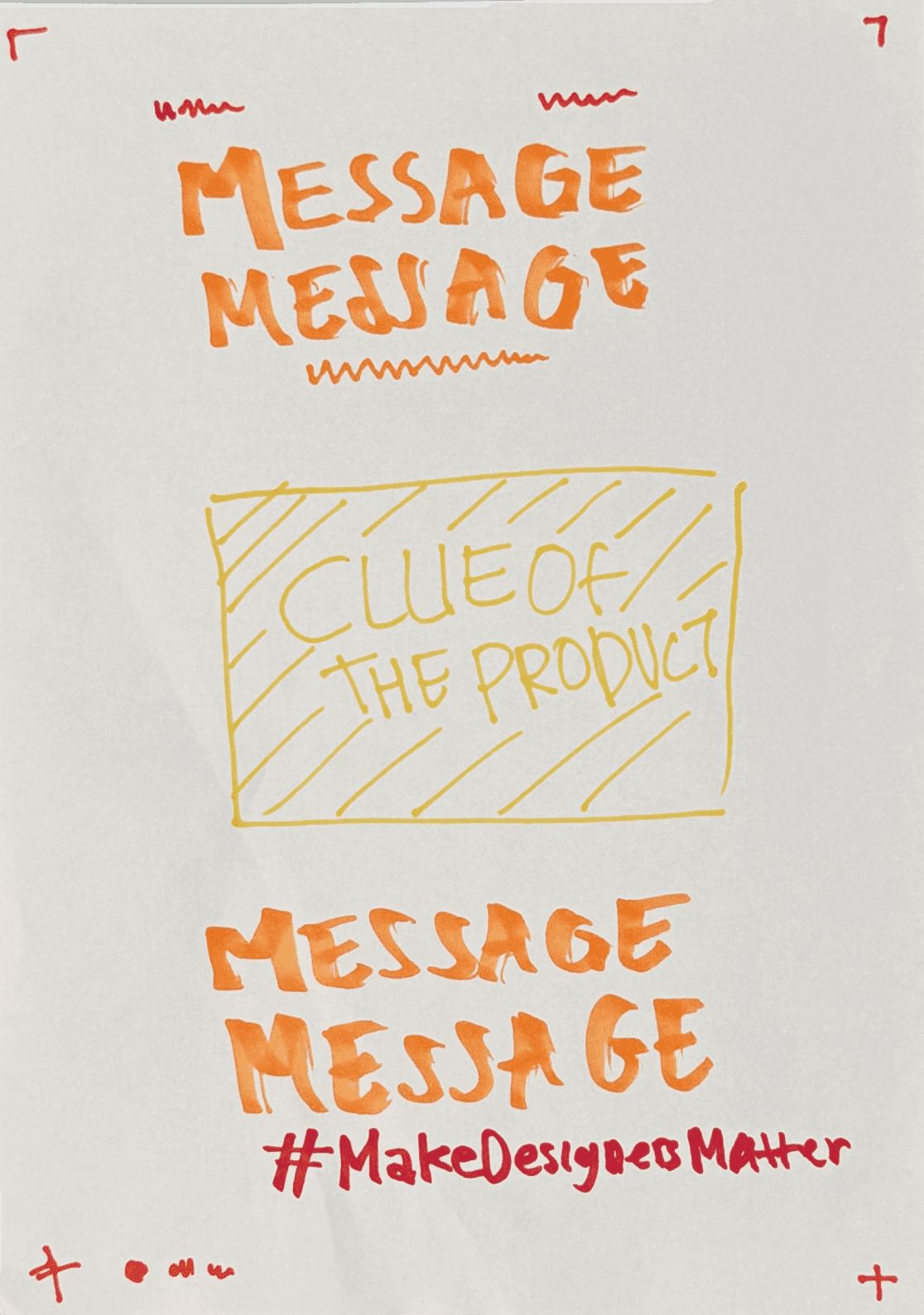
“Advocacy message urging people to appreciate design professions.”
The tagline
5 posters in total
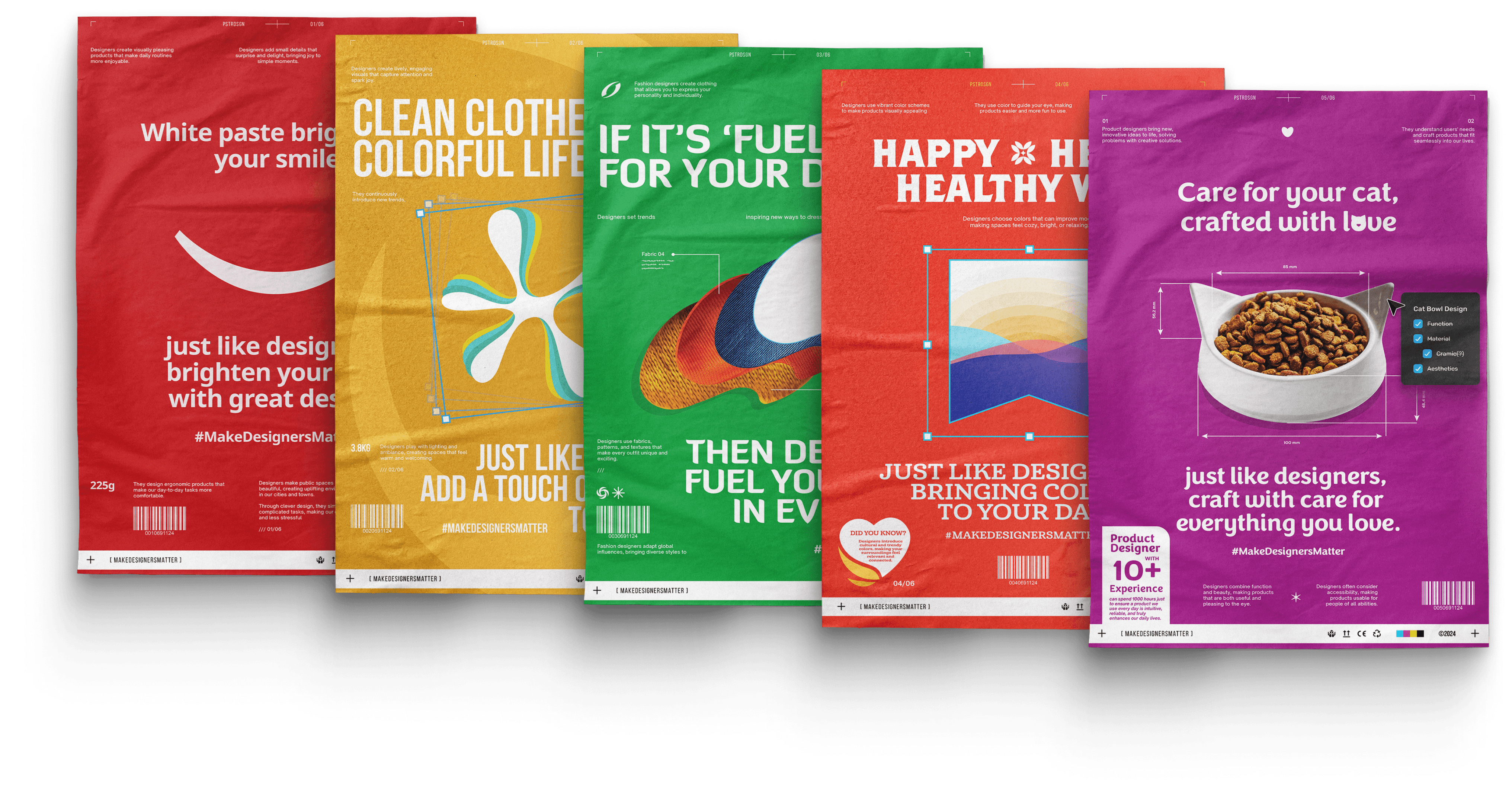
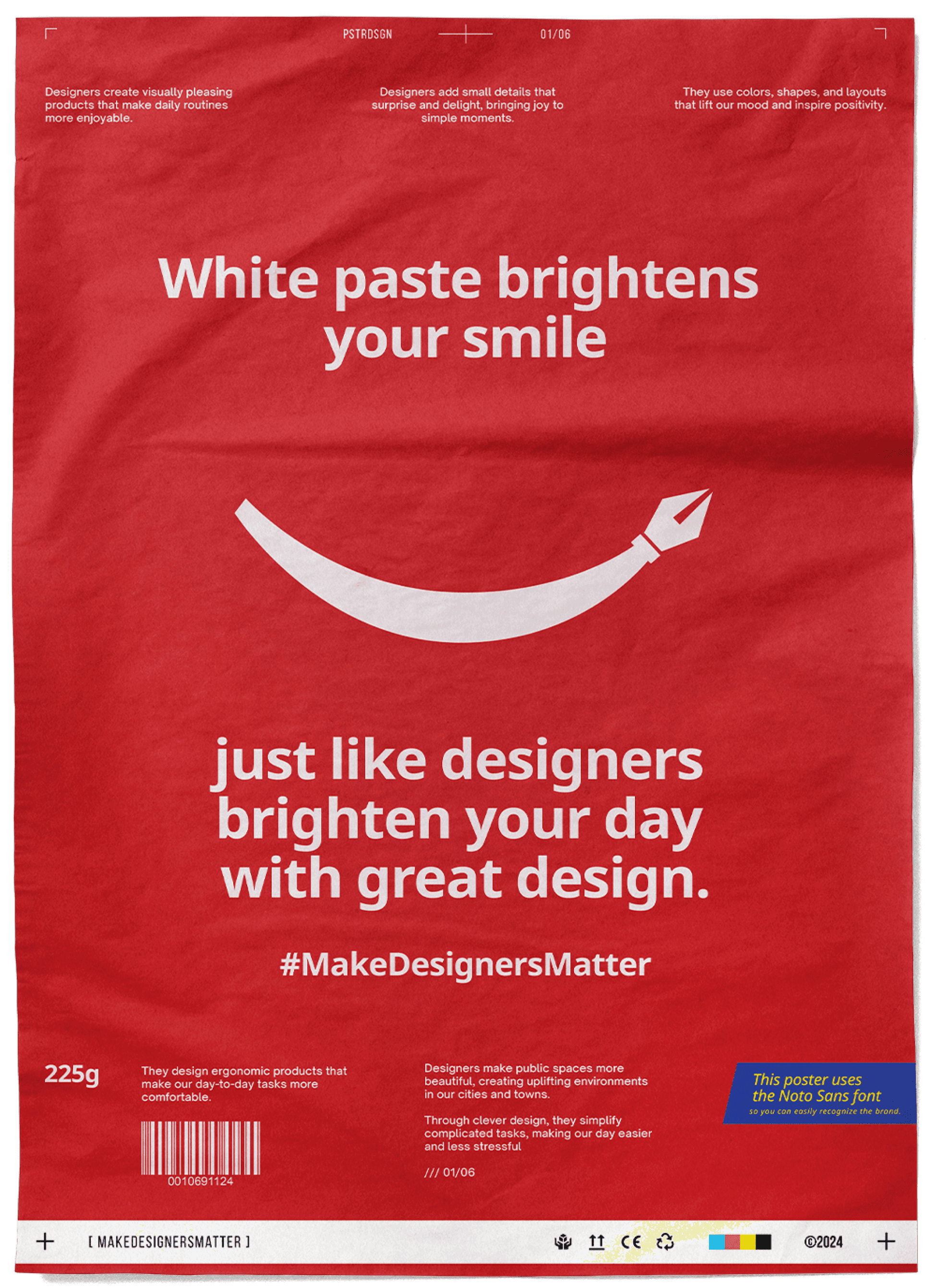
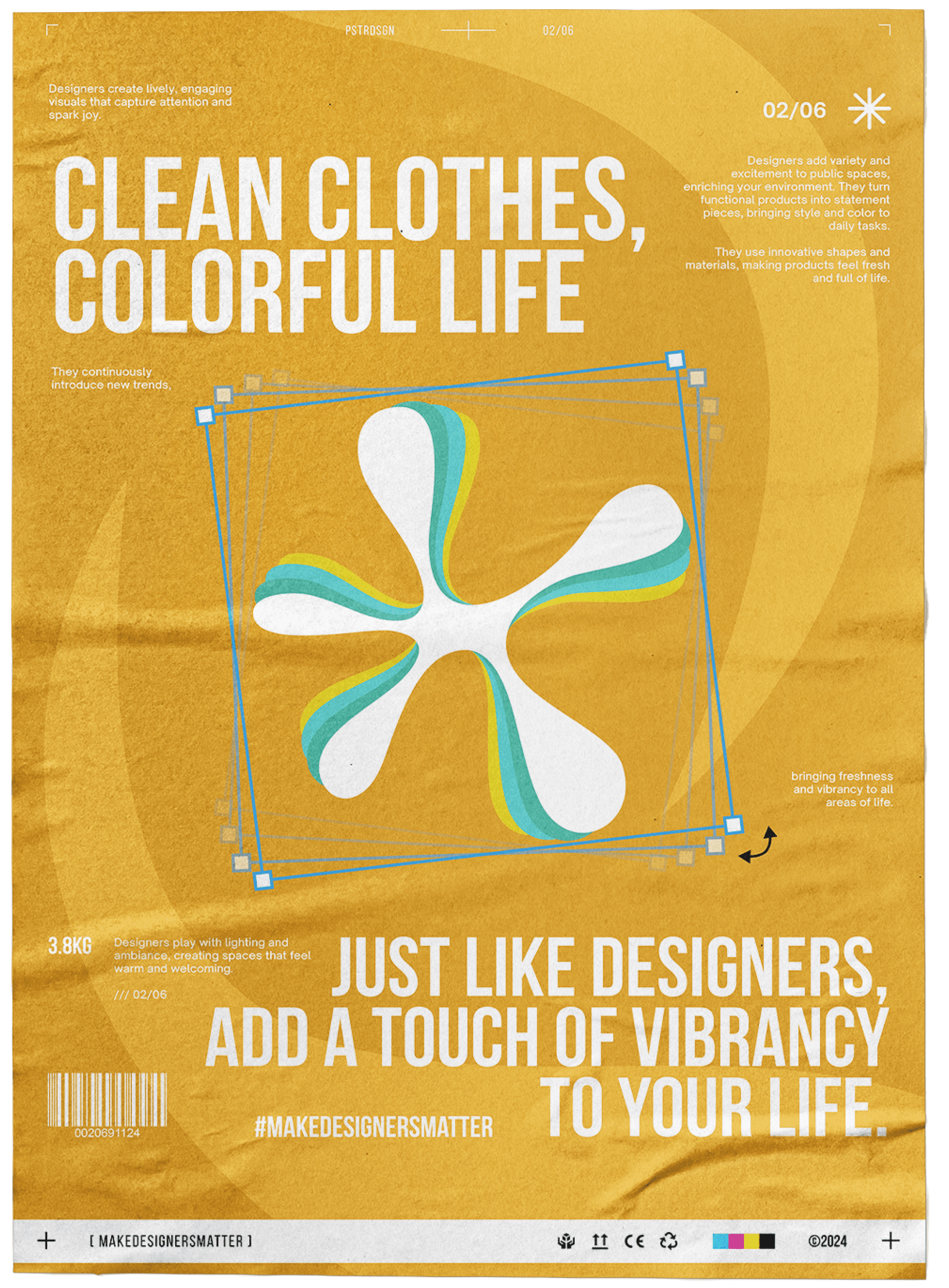
I decided to create five posters in A1 size, a large format that allows for greater visual impact and helps establish a stronger connection with the audience. This size was intentionally selected to ensure that the message and visuals are easily noticeable and engaging, even from a distance. As shown in the preview here, each poster has been thoughtfully designed to mimic the appearance of a specific product, adding a creative and relatable element to the overall presentation.
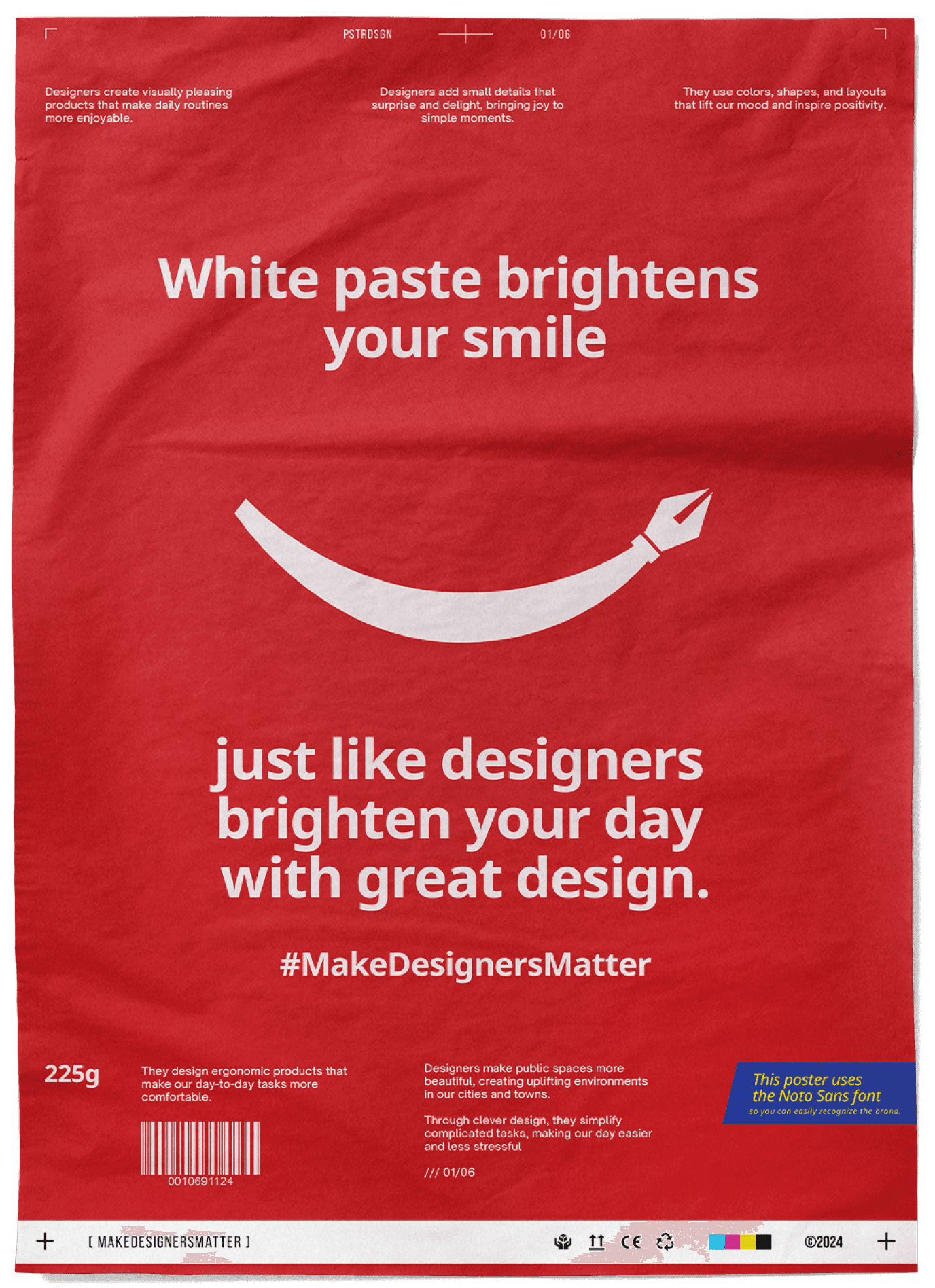
“White paste brightens your smile. Just like designers brighten your day with great design.”
Poster 01
Inspired by
This poster, inspired by Colgate toothpaste, creatively aligns the act of brightening a smile with the impact of design in enhancing daily life. The minimalistic red and white color scheme, iconic to Colgate, emphasizes the message: “White paste brightens your smile, just like designers brighten your day with great design.” By drawing parallels between the product's role and the often-overlooked contributions of designers, the poster highlights the transformative power of design in everyday experiences, reinforcing the importance of respecting the profession.


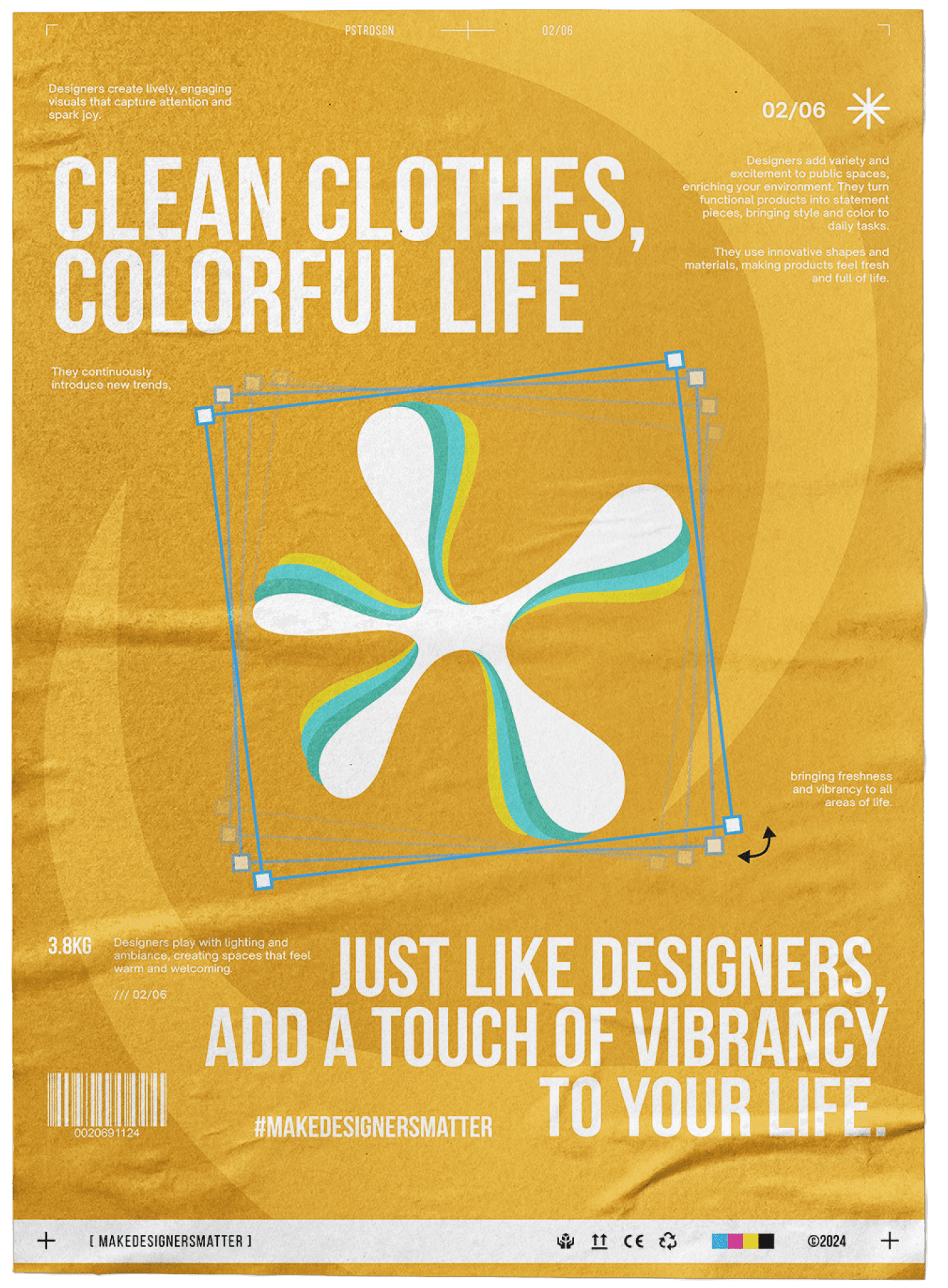
“Clean clothes, colorful life. Just like designers, add a touch of vibrancy to your life.”
This poster, inspired by Breeze Detergent, draws a creative analogy between the product’s ability to add vibrancy to clothing and the role of designers in enriching everyday life. With its bright yellow background and a splash-like graphic resembling detergent branding, the message "Clean clothes, colorful life" is paired with "Just like designers, add a touch of vibrancy to your life." The visual language mirrors the familiarity of laundry products while highlighting how design, much like cleanliness, enhances the quality of life, advocating for the appreciation of designers' contributions.
Poster 02
Inspired by


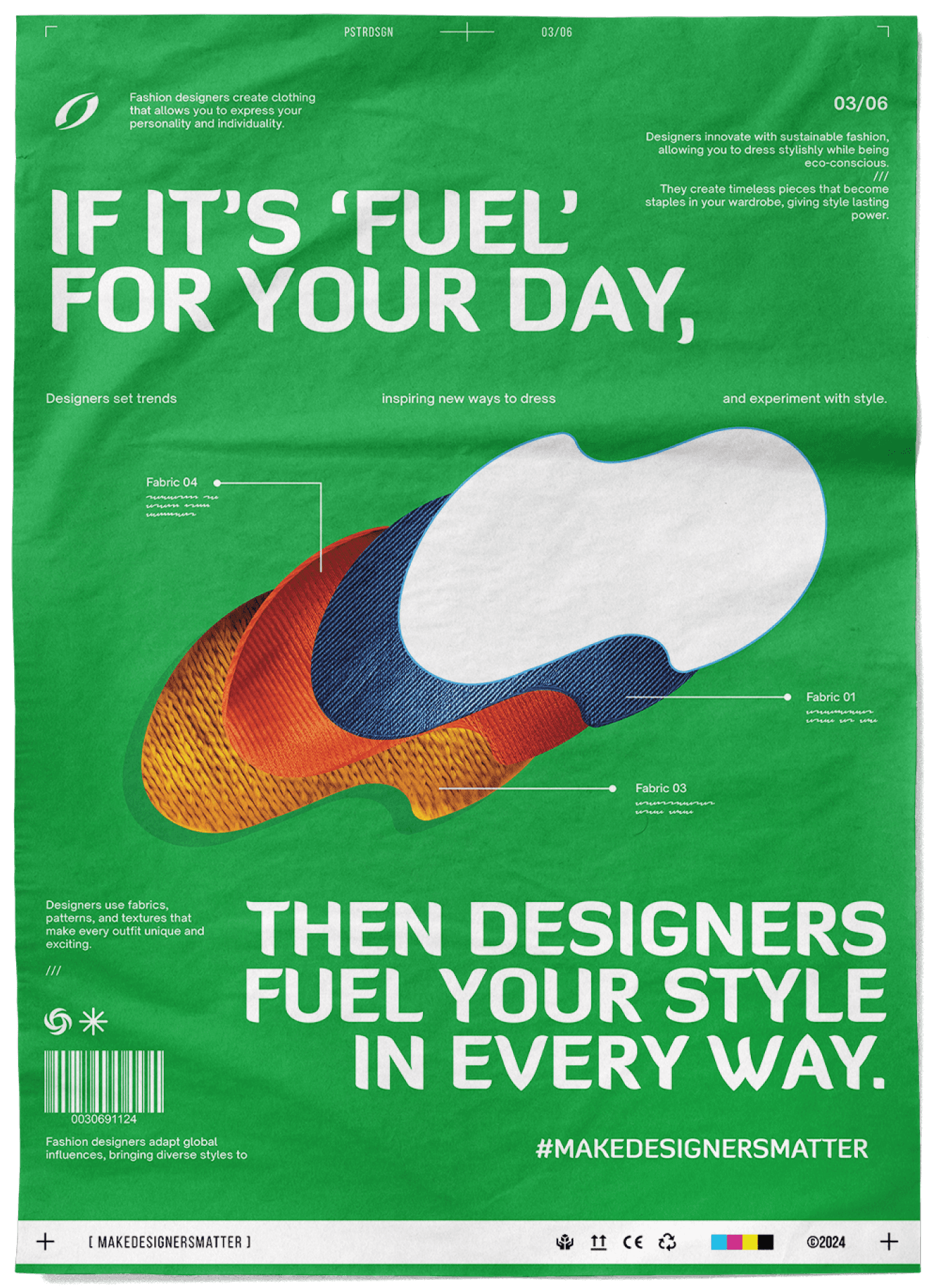
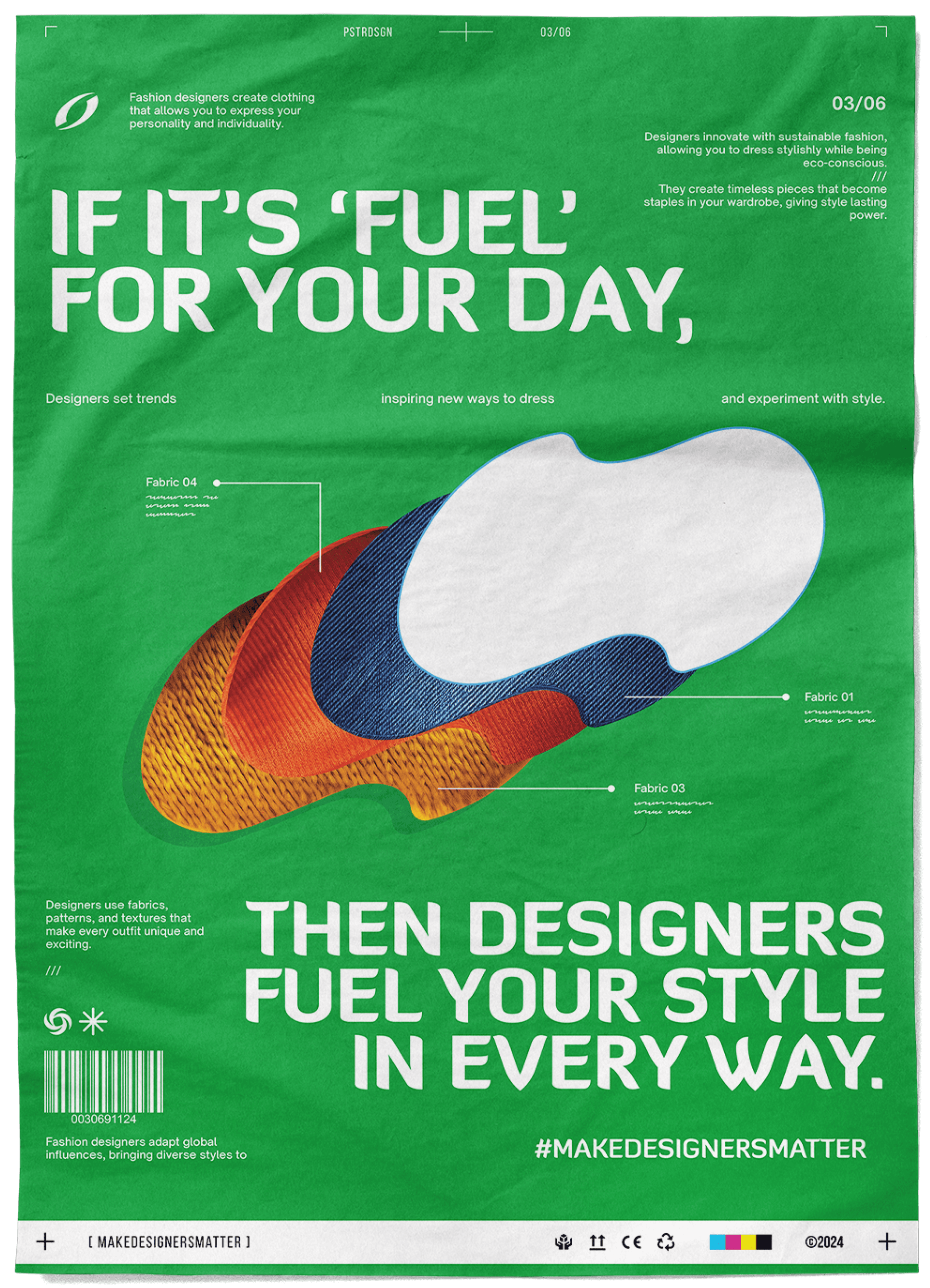
“If it’s ‘fuel’ for your day, then designers fuel your style in every way.”
This poster, inspired by Milo, creatively equates the product’s role as a daily energy booster with the influence of designers in shaping personal style. The vibrant green background, paired with a dynamic abstract graphic resembling a fabric swatch, reinforces the slogan: “If it’s ‘fuel’ for your day, then designers fuel your style in every way.” By drawing this parallel, the design underscores the essential yet often unrecognized role of designers in enhancing everyday experiences, while advocating for greater appreciation of their work.
Poster 02
Inspired by


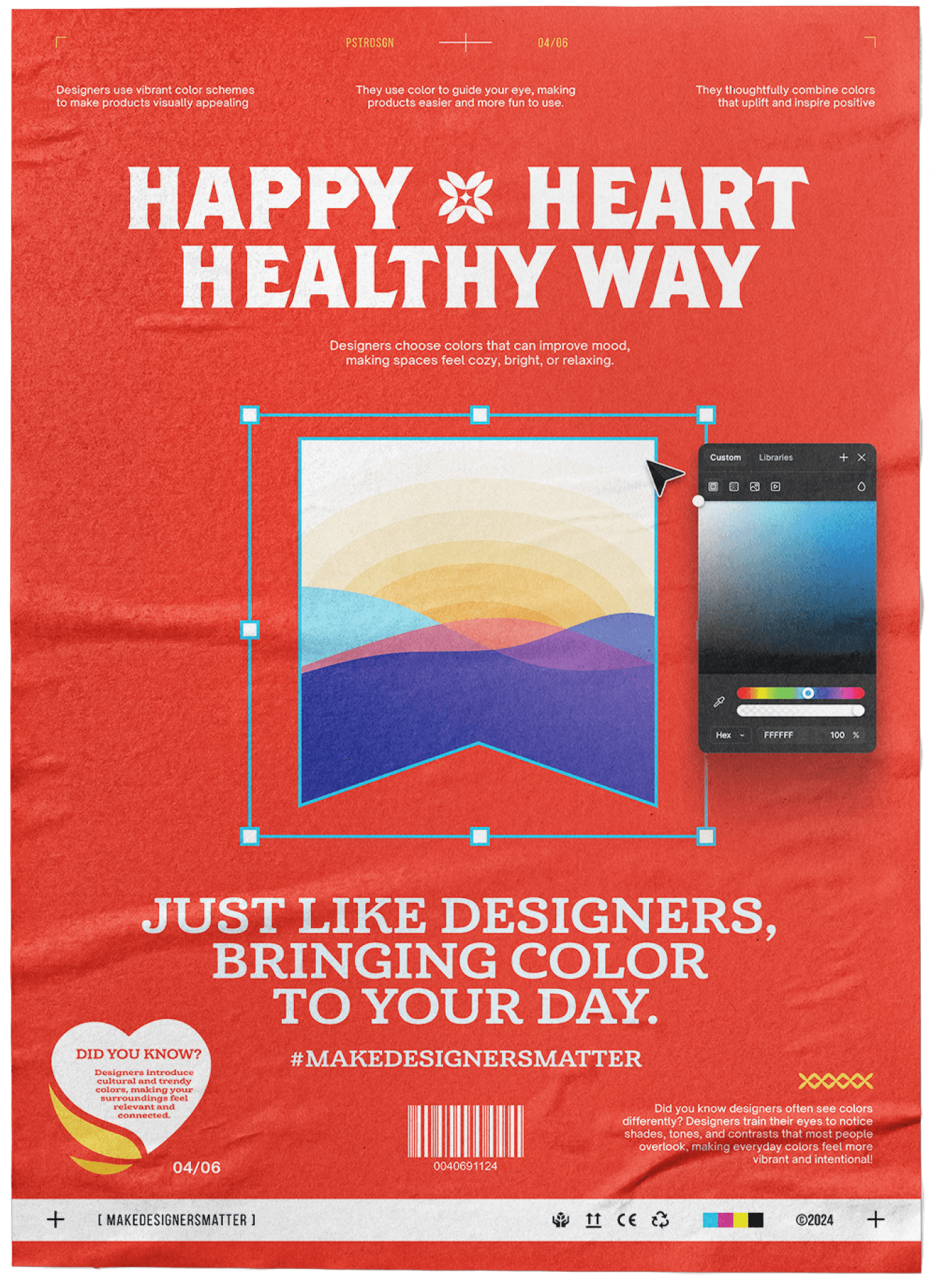
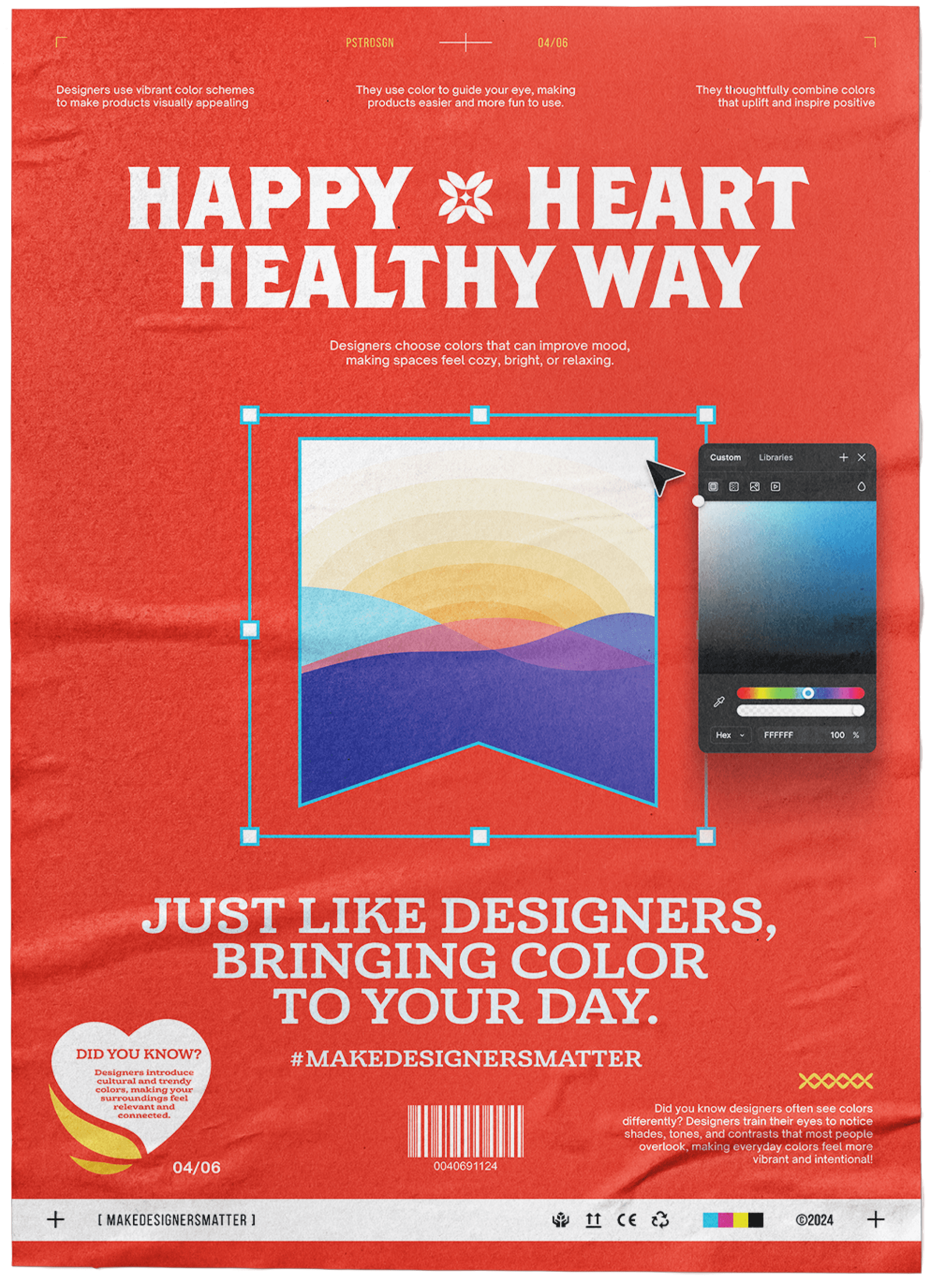
“Happy heart, healthy way. Just like designers, bringing color to your day.”
This poster, inspired by Quaker Instant Oatmeal, reimagines its iconic branding to advocate for designers. The bold red backdrop and clean typography mirror the health-conscious tone of the oatmeal brand, while the visual of a color wheel and gradient-filled image aligns with the theme of creativity. The tagline, "Just like designers, bringing color to your day," cleverly parallels the way oatmeal nourishes the body with how designers enrich our visual experiences. The message emphasizes the value of designers in shaping vibrant, thoughtful worlds, much like a trusted staple brings warmth to breakfast.
Poster 02
Inspired by


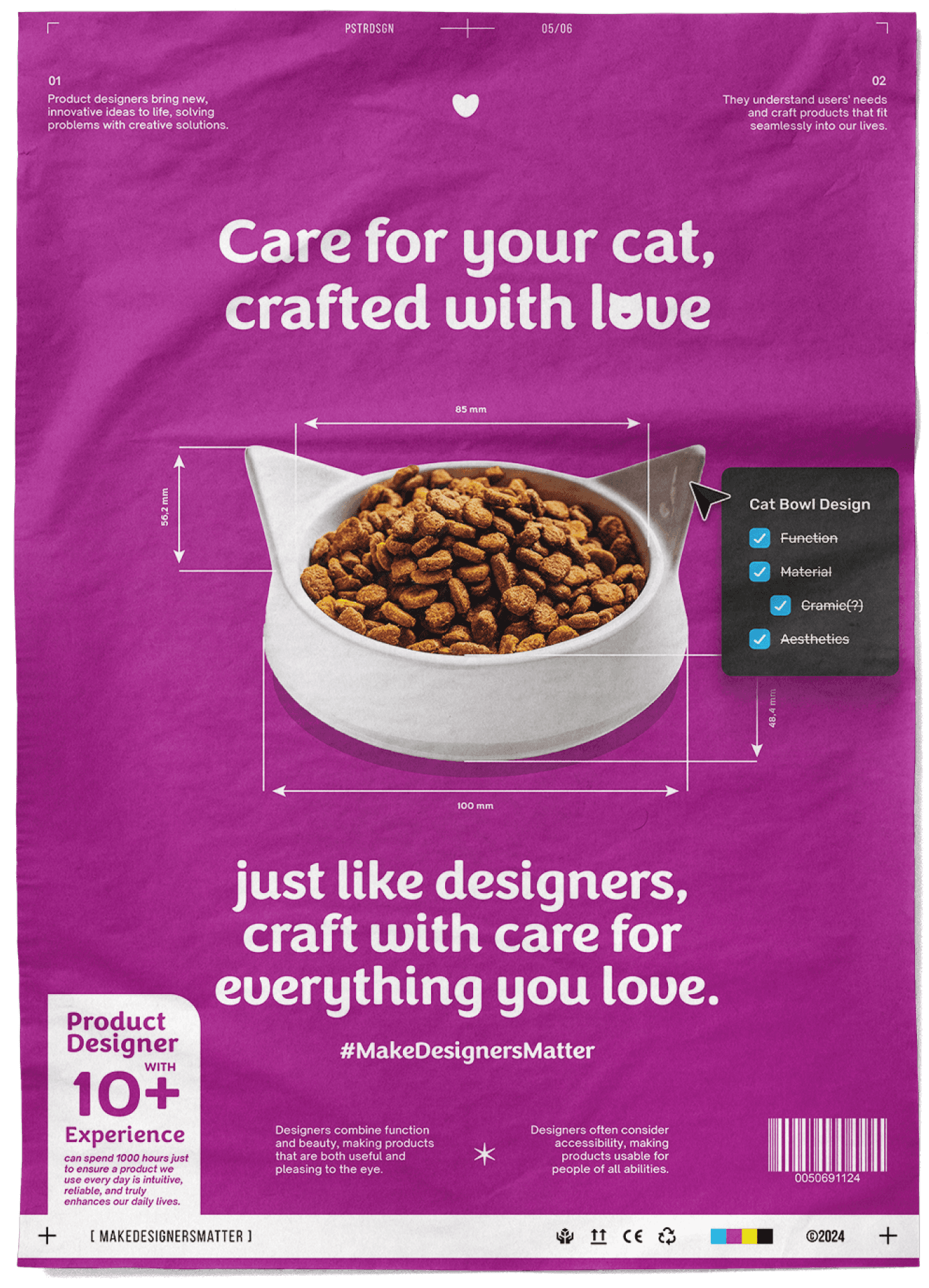
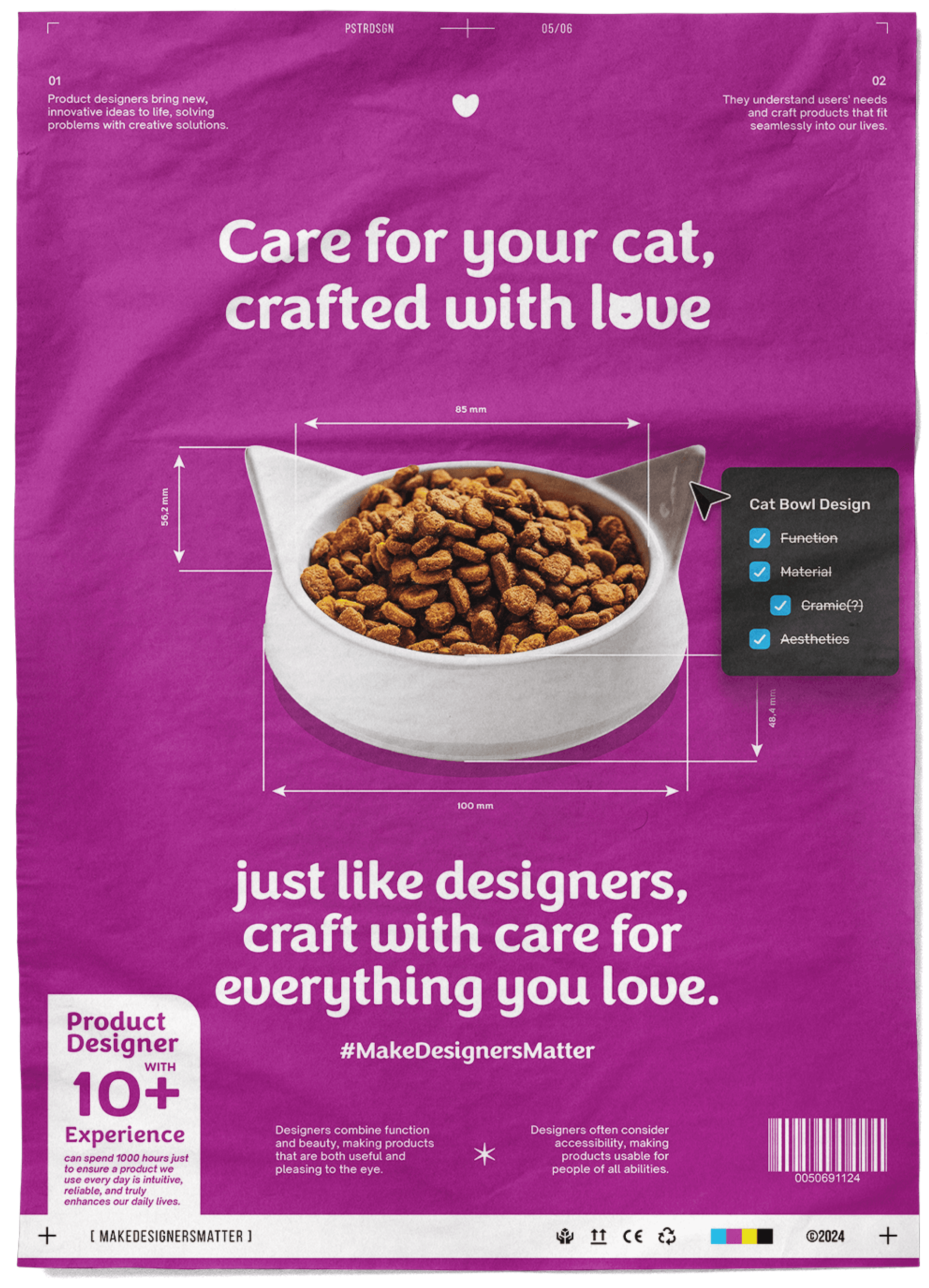
“Care for your cat, crafted with love. Just like designers, craft with care for everything you love.”
Inspired by Whiskas, this poster highlights the meticulous craft of designers using the familiar imagery of pet care products. The vibrant purple background mirrors the iconic branding, while the featured cat bowl, detailed with design measurements, emphasizes the thoughtfulness behind even everyday objects. The message, "Just like designers, craft with care for everything you love," draws a parallel between the care designers put into their work and the love pet owners show their cats. It underlines the essential role of designers in enhancing life’s details, much like a trusted pet brand adds value to a pet owner’s routine.
Poster 02
Inspired by



#MakeDesignersMatter
©2024 Independent Project ----- #MakeDesignersMatter